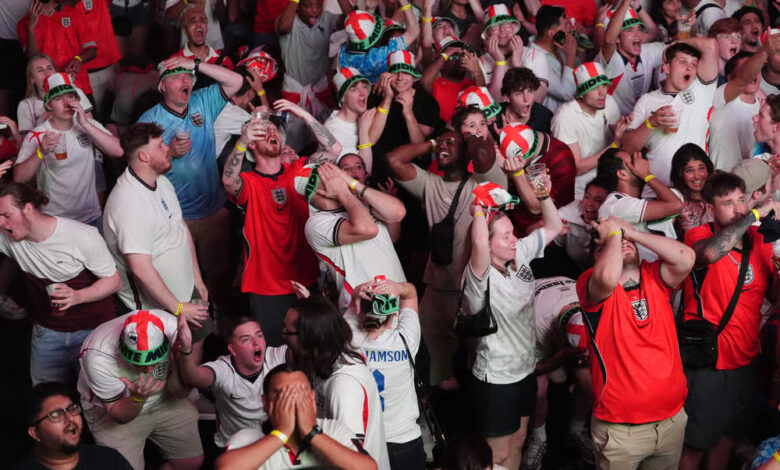
Thousands of football supporters across Britain experienced significant payment difficulties during England’s 0-0 draw against Ghana at the 2026 FIFA World Cup after a major outage disrupted services provided by payment processor Worldpay.
The technical issue occurred while fans were watching the Group L encounter on Tuesday evening, creating widespread disruption at pubs, supermarkets, bars, restaurants, and other businesses that were expecting a busy night due to the World Cup fixture. As England and Ghana battled for an important result on the pitch, many supporters found themselves unable to complete routine contactless transactions off it.
The outage quickly became one of the biggest talking points away from the football, with frustrated customers reporting failed payments and businesses scrambling to find alternative ways to serve customers during one of the busiest periods of the evening.
Contactless Payments Suddenly Stop Working
The disruption affected a large number of customers who attempted to make purchases using contactless cards and digital payment methods.
As reports of payment failures increased, many consumers turned to social media and online outage-tracking platforms to share their experiences and determine whether others were facing similar problems.
Complaints rapidly appeared on Downdetector as users reported being unable to pay for drinks, food, groceries, and other purchases. Several customers claimed that payment terminals were declining transactions despite sufficient funds being available in their accounts.
The timing of the outage made the situation particularly frustrating because it coincided with one of England’s most anticipated matches of the tournament, a fixture that had drawn large crowds to pubs and entertainment venues throughout the country.
Many supporters arrived expecting a normal evening of football and socialising, only to discover that card payments were suddenly unavailable.
Pubs Forced to Switch to Cash Only
Some of the biggest challenges were experienced by pubs and hospitality venues that rely heavily on electronic payments during major sporting events.
With large numbers of customers ordering drinks and food throughout the evening, the inability to process card transactions created immediate operational difficulties.
Several pubs took to social media to inform customers that they were temporarily accepting cash only while payment systems remained unavailable. Others warned customers in advance to bring cash if they planned to visit during the match.
For businesses already dealing with high customer volumes, the disruption created additional pressure on staff members who were forced to explain the situation repeatedly while attempting to maintain service.
Some venues reportedly experienced delays and longer queues as employees searched for temporary solutions to keep operations running.
Long ATM Queues Appear Across the Country
As news of the outage spread, many supporters began looking for alternative ways to pay.
This triggered an unexpected rush towards cash withdrawals, with videos shared online showing lengthy queues forming outside ATMs in several locations.
Supporters who normally rely entirely on cards and mobile payments suddenly found themselves needing physical cash to continue their evenings.
The scenes highlighted how dependent many consumers have become on digital payment systems and how quickly disruption can spread when those systems encounter problems.
For some fans, the outage meant leaving pubs or shops temporarily in order to locate a working cash machine before returning to watch the remainder of the match.
Others reported abandoning purchases altogether because they were unable to access cash quickly enough.
Supermarkets and Retailers Also Affected
The impact was not limited to pubs and bars. Customers reported experiencing difficulties at supermarkets, including branches of Tesco, where some contactless transactions reportedly failed during the outage.
Retailers faced the challenge of dealing with confused customers while attempting to determine whether the problem originated from individual stores or from a wider payments network issue.
Because the disruption affected multiple locations and businesses simultaneously, it soon became clear that the problem extended far beyond any single retailer.
The widespread nature of the outage increased concern among both consumers and businesses as the evening progressed.
Worldpay Explains What Happened
Following growing complaints, Worldpay acknowledged the disruption and confirmed that technical teams were investigating the issue. According to the company, the problems were linked to an external power-related incident that affected parts of its payment infrastructure.
In a statement, Worldpay said:
“A third-party power disruption is causing intermittent transaction authorization issues and tokenisation requests errors on some Worldpay platforms.”
The company also explained that engineers had already restored services to some affected systems while continuing efforts to return all platforms to normal operation.
Worldpay added:
“Our technical teams have restored service to some platforms and continue to troubleshoot to restore full service as soon as possible.”
The statement provided reassurance that the issue was being addressed, although many customers and businesses continued to experience disruption during the England-Ghana match.
Major Sporting Events Increase Pressure on Payment Systems
The incident has renewed discussions about the reliability of digital payment infrastructure during major sporting occasions.
Large events such as the FIFA World Cup often generate unusually high transaction volumes as supporters gather in public venues to watch matches, purchase food and drinks, and participate in related activities.
Industry experts note that even relatively short outages can have significant consequences for businesses operating during these periods because customers may decide not to complete purchases if payment systems fail.
With many businesses now relying almost entirely on cashless transactions, outages can quickly affect both revenue and customer satisfaction.
Experts Warn About Financial Risks
The disruption also prompted comments from payments industry specialists regarding the importance of system resilience.
Scott Dawson, chief executive of payments company Decta, highlighted the risks businesses face when payment systems fail during major events.
According to Dawson, high-profile occasions such as World Cup matches create limited windows of opportunity for businesses to generate revenue.
When payment systems stop working during those periods, every failed transaction can represent a lost sale and potentially a lost customer.
He stressed that companies operating critical financial infrastructure must prioritise operational resilience and ensure systems are prepared to handle peak demand.
The incident serves as a reminder that while digital payments offer convenience and speed, they also create vulnerabilities when technical failures occur.
Football Fans Share the Frustration
While England and Ghana ultimately played out a tense but goalless draw in Boston, many supporters across Britain found themselves talking as much about payment failures as football.
For some fans, the inability to buy drinks or complete purchases became an unexpected part of their matchday experience.
Although services were gradually restored, the disruption briefly overshadowed the action on the pitch and highlighted how closely modern sporting events are linked to the smooth functioning of digital payment networks.
As England and Ghana shared the points in Group L, thousands of supporters were left hoping that future World Cup nights would be remembered for the football rather than for failed transactions and emergency trips to the nearest cash machine.
Share this: