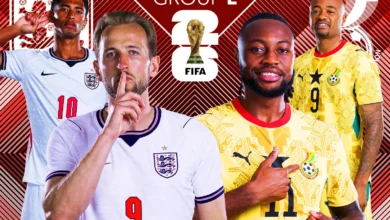
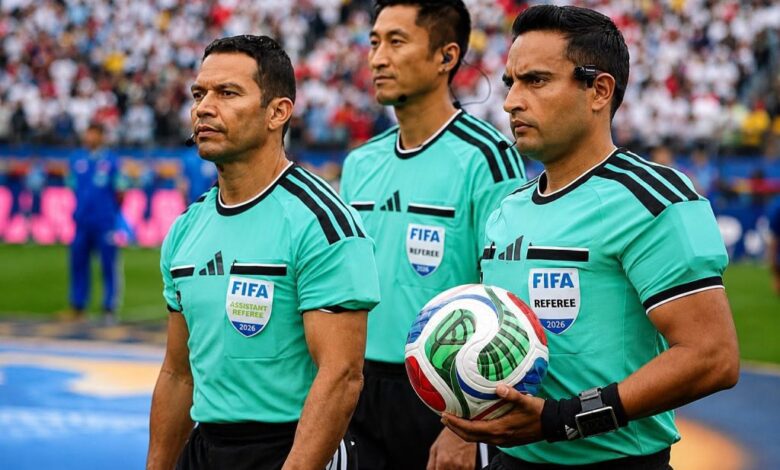
The officials who handled Ghana’s controversial goalless draw against England continue to face questions after the Black Stars were denied what many observers believe was a clear penalty during the second half of the match.
The Group L encounter at the 2026 FIFA World Cup ended without a goal, but much of the discussion after the final whistle centered on a major refereeing decision that could have changed the outcome of the game.
Honduran referee Said Martinez was the man in charge on the field, while Mexican official Guillermo Pacheco served as the Video Assistant Referee (VAR).
Both officials have come under scrutiny following an incident involving Ghana substitute Prince Kwabena Adu and England defender Ezri Konsa.

The Incident That Sparked Debate
The controversial moment occurred during the second half with the match still level.
Ghana were pushing forward in search of a breakthrough when Adu made a dangerous run into the England penalty area.
As he moved toward goal, he appeared to be brought down by Konsa inside the box.
The Ghana players reacted immediately, appealing for a penalty and expecting the referee to point to the spot.
However, Martinez waved away the protests and allowed play to continue.
The decision surprised many supporters inside the stadium and watching around the world.
What happened next created even more controversy.
Despite the availability of VAR, no on-field review was recommended.
Pacheco, who was overseeing the video review system, decided there was no need for Martinez to take a second look at the challenge.
As a result, the original decision stood and Ghana were not awarded a penalty.

Ghana Camp Left Frustrated
The decision left the Black Stars camp furious.
Players continued to question the call during the match, while members of the coaching staff were visibly frustrated on the touchline.
After the final whistle, Ghana head coach Carlos Queiroz did not hide his disappointment.
The experienced manager suggested that both the referee and VAR had failed to identify what he believed was a clear foul.
“We had opportunities to win it, and I’m not sure if VAR is still working. It was a clear penalty,” Queiroz said.
His comments reflected the feelings of many Ghana supporters, who believed their team had been denied a golden opportunity to secure victory.
Why the Decision Matters So Much
The controversy is not only about whether a penalty should have been awarded.
Many people believe the decision could have had a major impact on Ghana’s World Cup campaign.
At the time of the incident, the match was still goalless.
Had Ghana received the penalty and converted it, the Black Stars could have taken the lead against one of the strongest teams in the tournament.
A victory would have earned Ghana all three points and significantly improved their position in Group L.
In fact, it could have secured qualification for the Round of 32 with one match still remaining.
Instead, Ghana were forced to settle for a draw and must now earn qualification in their final group match against Croatia.
That reality has made the disputed decision even more painful for players and supporters.
Spotlight Falls on Said Martinez
Much of the attention has focused on referee Said Martinez.
Before this tournament, Martinez had built a strong reputation within CONCACAF football.
The 34-year-old official has overseen some of the region’s biggest matches, including Gold Cup finals and Nations League finals.
Over the course of his career, he has officiated more than 160 professional matches.
His rise through the refereeing ranks has been impressive, and he was considered one of the most trusted officials selected for the World Cup.
However, the Ghana versus England match presented a new challenge.
It was the first time Martinez had officiated either national team.
It was also the first time he had taken charge of a match involving an African national side.
Because of that, there was no previous history between the referee and either team.
Even so, the penalty incident has now become one of the most talked-about moments of his career.
Questions Also Directed at VAR Official Guillermo Pacheco
While Martinez made the original decision on the field, many observers believe the bigger question involves the role of VAR.
The technology was introduced to help referees correct clear and obvious mistakes.
In situations where an important incident may have been missed, VAR can recommend an on-field review.
The referee then has an opportunity to watch the footage again before making a final decision.
For many football fans, the biggest surprise was not that Martinez initially missed the foul.
Instead, it was that VAR official Guillermo Pacheco did not advise the referee to review the incident.
Supporters argue that the challenge appeared serious enough to deserve another look.
As a result, criticism has also been directed toward Pacheco and the VAR team.
Many people believe the video review system failed to perform its intended role.
Former Officials Have Added to the Debate
The controversy became even bigger after former FIFA assistant referee Darren Cann publicly shared his opinion on the challenge.
Cann, who worked at the highest level of international football and was part of the officiating team at the 2010 World Cup final, said he believed Ghana should have received a penalty.
According to Cann, Konsa made contact with Adu without touching the ball.
His assessment added significant weight to the argument that the officials got the decision wrong.
Because Cann is a former elite referee rather than a player or supporter, many fans view his opinion as particularly important.
His comments have continued to fuel discussion about the incident.
Ghana Must Now Focus on Croatia
Despite the frustration surrounding the penalty decision, Ghana must now shift its attention to the next challenge.
The Black Stars still have qualification for the knockout stage in their own hands.
Their final group match against Croatia will determine whether they advance to the Round of 32.
Coach Carlos Queiroz will be hoping his players can put the controversy behind them and focus on delivering a strong performance.
The team has shown resilience throughout the tournament and will believe they can still achieve their objective. Continue to More Sports.
Share this: